


Barone Ricasoli
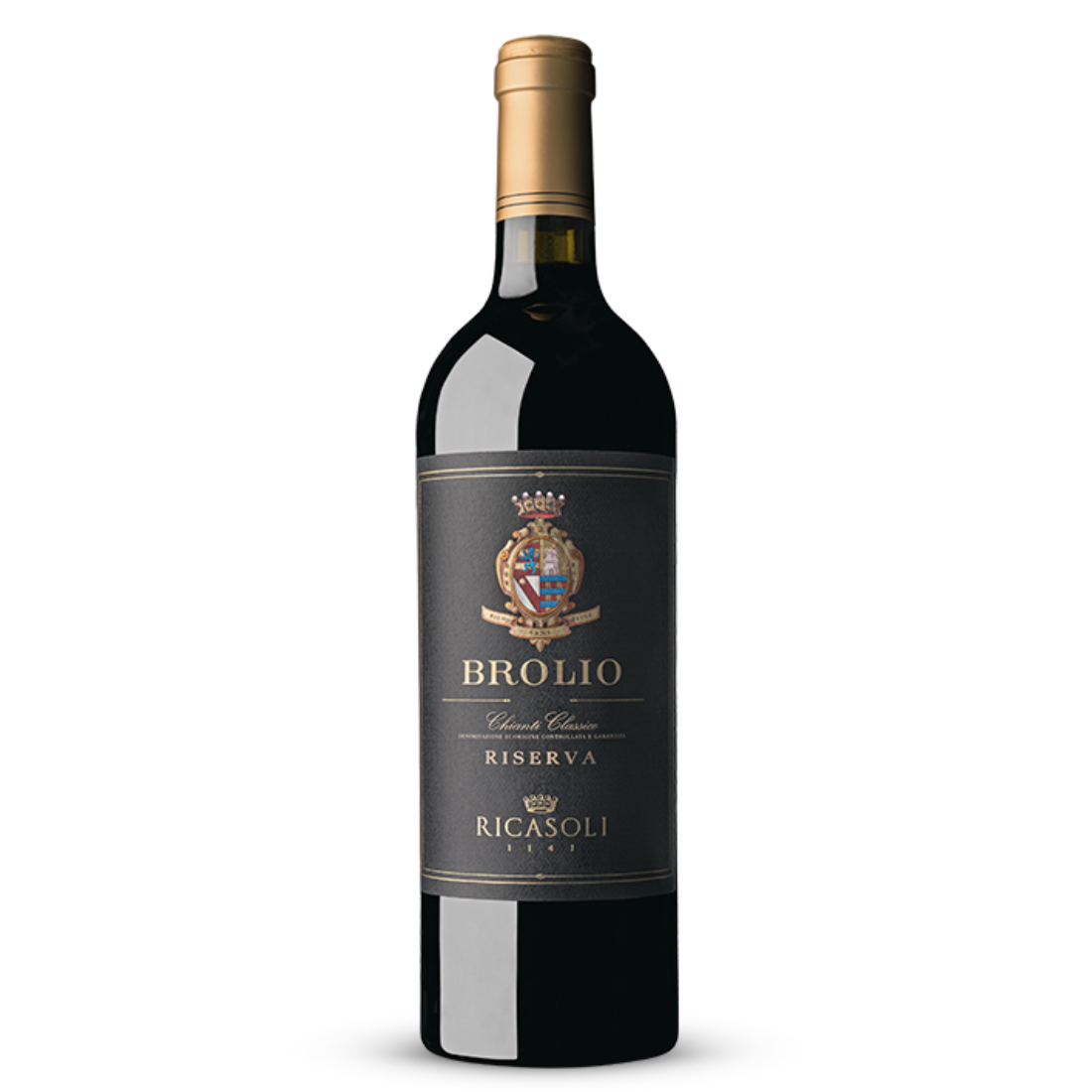
Barone Ricasoli Brolio Chianti Classico Riserva DOCG 2023 0,75 l
Barone Ricasoli Brolio Chianti Classico Riserva DOCG 2023 0,75 l
Regular price
32,00 €
Regular price
Sale price
32,00 €
Unit price
per
Taxes included.
 Tuscany Italy
 80% Sangiovese, 15% Merlot, 5% Cabernet Sauvignon
 Matured in oak barrels
 13.5%
13.5%
Couldn't load pickup availability
The aroma is dominated by cherries, plums, blackcurrants, and dried flowers, alongside notes of tobacco, cedar, leather, and Mediterranean herbs. On the palate, the wine is dry, elegant, and medium to full-bodied, with bright acidity and firm but very well-integrated tannins. The taste reveals red and dark fruits, spices, cocoa, and subtle minerality. The finish is long, classic, and highly gastronomic.

About the manufacturer
Barone Ricasoli is one of the oldest wineries in Italy and one of the most important in the history of Chianti. The roots of the Ricasoli family in Tuscany date back to the 12th century, with their main symbol being the Castello di Brolio in the Chianti Classico region. For over 800 years, the winery has remained in the family's hands, even through wars, political changes, and economic crises, making it considered today not only a winemaking estate but also a historical heritage of Tuscany. The current owner, Francesco Ricasoli, is the 32nd generation representative, continuing the family tradition in the modern world of winemaking.

Baron Bettino Ricasoli, one of the most important figures in Italian wine history, had the greatest influence on the Chianti region. In the 19th century, he was not only the Prime Minister of Italy but also the first person to systematically define the classic Chianti formula. In 1872, he created a recipe that gave the leading role to the Sangiovese grape, supplemented by Canaiolo and other local varieties. This model became the foundation of Chianti for decades and helped shape the region's identity worldwide. Bettino Ricasoli was also one of the first in Italy to approach winemaking scientifically, studying soils, clonal differences, and the impact of terroir on wine, which is why he is often called the father of modern Chianti winemaking.